Outdoor String Lights: Spacing, Hanging, and Weatherproofing Basics
One string of café lights can turn a plain fence into the best room in the house — if the spans, swags, and weatherproofing are planned before the ladder comes out.
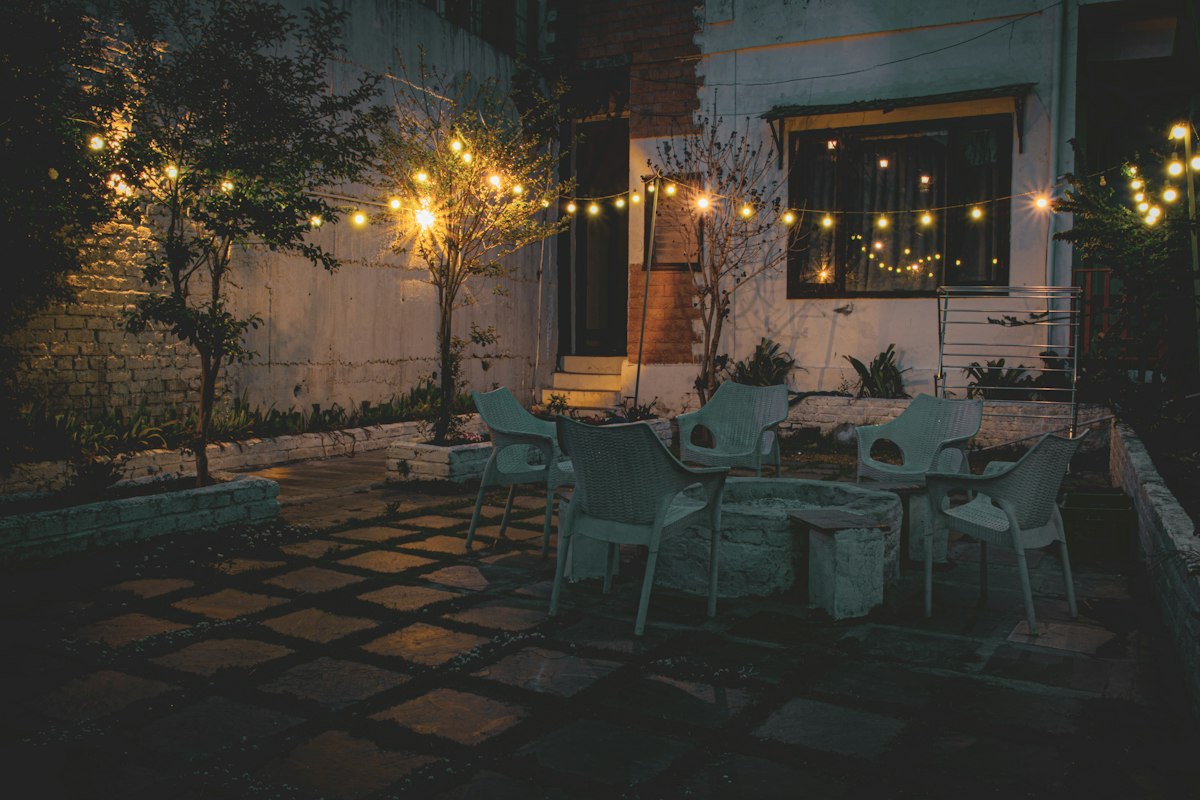
There is a before-and-after moment in every backyard: the afternoon the first string of café lights goes up, the evening they come on, and the sudden realization that the plain fence you have ignored for years is now the backdrop of the best room in the house. Outdoor string lights are the cheapest transformation in all of home and garden — which is exactly why people rush them, drape them at random, and end up with sagging swags, a tripped breaker, or a set that dies in the first serious storm.
Hung properly, though, string lights are nearly set-and-forget. The craft is in three unglamorous things: planning the spans before you buy, supporting the cable so the sockets are not carrying the weight, and choosing lights genuinely rated for outdoor life. Get those right and the glow takes care of itself.
This guide covers spacing and layout, how to hang runs that stay up, and the weatherproofing basics that separate a five-year installation from a one-season fling.
The short version
Measure your spans first and buy strings that cover them with a little slack — a gentle swag of about 6 inches of dip per 10 feet of span looks right and relieves tension. Keep bulbs spaced as the manufacturer made them (commonly 12–24 inches apart on café strings) and hang one string per span between solid anchor points: house, pergola, tree, or a purpose-set pole. For long or heavy runs, suspend the string from a steel guide wire so the wire bears the load. Outdoors, use only bulbs and strings rated for exterior use, plug into a GFCI outlet, and keep every connection off the ground and out of puddle range.
What to look for
- A genuine outdoor rating — look for strings specified for outdoor or wet-location use, with sealed sockets; "outdoor" in the marketing name alone is not a rating.
- LED over incandescent for most homes — LEDs sip power (a long string can draw less than a single old bulb), run cool, and survive knocks; incandescent gives a warmer vintage glow at many times the wattage and fragility.
- Shatterproof bulbs for real backyards — plastic LED bulbs survive drops, hail, and kids with soccer balls in a way glass simply does not.
- Connectable length limits — manufacturers state how many strings can join end to end; respect it. The limit is set by the wire, not by your enthusiasm.
- Replaceable bulbs and fuses — on better strings, one dead bulb should not darken the run, and a blown plug fuse should be a two-minute fix.
- Solar versus plug-in, chosen honestly — solar strings need real sun on the panel and give softer light for fewer hours; plug-in gives full brightness, all evening, every evening.
Ambience Pro Solar Outdoor String Lights
Solar-powered café string lights with shatterproof LED bulbs and a detachable solar panel, the best-known name in no-wiring-needed patio lighting.
- Solar panel charges by day, lights run through the evening
- Shatterproof plastic LED bulbs in a warm vintage style
- Weatherproof construction intended for year-round outdoor use
- + No outlet needed — hang them anywhere the panel sees sun
- + Zero running cost and automatic dusk operation
- + Bulbs survive drops that would end glass strings
- – Brightness and hours depend on the day's sunshine
- – Softer output than plug-in strings for task lighting
Ambience Pro LED Outdoor String Lights
The plug-in sibling of the solar model: commercial-grade LED café string lights with heavy-duty cable and full, dependable brightness all evening.
- Commercial-strength cable designed for permanent installs
- Warm-white LED bulbs with a vintage filament look
- Connectable end-to-end within the manufacturer's stated limit
- + Full brightness regardless of weather
- + Built for guide-wire hanging and long spans
- + LED efficiency keeps long runs cheap to operate
- – Needs a GFCI outlet within reach of the first span
- – Heavier cable wants proper support on long runs
Classic LED Cafe String Lights
Café-style LED string lights from GE's Enbrighten line with impact-resistant acrylic bulbs and linkable strands for larger layouts.
- Impact-resistant acrylic bulbs for worry-free hanging
- Linkable design for multi-strand patio layouts
- Warm white light with a classic café-bulb profile
- + Widely available, including replacement bulbs
- + Sturdy build suited to permanent installation
- + Even, warm light over dining areas
- – Bulbs are larger — check swag clearance over walkways
- – Premium pricing per foot versus basic strings
Planning the layout: spans, swags, and spacing
Start with anchor points and a tape measure, not with a shopping cart. The classic patterns are a zigzag across a patio, a perimeter run along a fence or pergola edge, a maypole radiating from one tall pole to the corners, and straight swags between house and tree. Sketch the total length, then add slack for the swags: as a rule of thumb, a string needs about 5–10% more length than the straight-line distance, because the graceful dip is literally made of extra cable.
On spacing, the bulbs come pre-spaced and your job is mostly not to fight it. Café strings typically place bulbs every 12 to 24 inches; across a small patio, the tighter spacing reads as richer and more even, while long perimeter runs can stretch to wider spacing without looking sparse. What matters visually is evenness — swags of equal depth, bulbs hanging at a consistent height, no one section bunched while another strains straight.
Keep the lowest point of any swag comfortably above head height over walkways — around 7 feet is the common target — and check the sightline from your favorite chair: you want to see under the lowest swag, not through a curtain of bulbs at eye level.
Hanging it so it stays hung
The mechanical secret of every long-lasting installation is that the light string should not be its own support. For spans over roughly 15–20 feet, or any span carrying heavier glass bulbs, run a stainless guide wire (aircraft cable) between the anchors, tension it with a small turnbuckle, and clip or tie the string to the wire every few feet. The wire takes the tension; the string just glows. This is the difference between lights that survive a windy night and lights found in the hedge.
For anchors, screw eyes into solid wood or masonry beats nails into fence boards, and purpose-made poles — set in the ground or in heavy planted pots — solve the classic "nothing to hang from on that side" problem. On trees, use straps or hooks rather than screws where the tree matters to you, and leave slack for growth and sway: a tree moves constantly, and a rigid run will eventually lose the argument.
Never staple through the cable, hang a run by its plug end, or let a connection joint sit in a gutter line or on the ground. Most real-world string light failures are water in a connection or a cable damaged at a stress point — both preventable in the first ten minutes.
Weatherproofing basics that actually matter
Outdoor electricity is safe when three conditions hold: the equipment is rated for it, the circuit is protected, and the connections stay dry. Plug into a GFCI-protected outlet (standard on modern exterior outlets), which cuts power instantly if current leaks. Use an in-use outlet cover so the plug stays shielded while connected, and route the cable so plugs and inline joints sit up off the soil — even lifting them onto a brick or hook removes the puddle scenario that kills most setups.
Between strings, screw connections together fully and, on exposed runs, a wrap of self-fusing silicone tape over the joint adds cheap insurance. At season's end, the honest choice by climate: in mild regions many owners leave quality strings up year-round and inspect them each spring; where winters bring ice and real storms, taking strings down (leave the guide wire and hardware) extends their life noticeably. If your lights share the patio with the furniture decisions in our patio furniture materials comparison, plan both under the same rule — the patio you can use in March is the one you protected in November.
FAQ
How far apart should outdoor string light bulbs be?
As manufactured — you choose spacing when you choose the string. Everyday café strings run 12–24 inches between bulbs. For eating areas choose the tighter end for even light; for long fence runs, wider spacing still looks generous. If you need more light rather than more glow, add a second parallel run instead of hunting for ultra-dense strings.
Can I leave string lights up all year?
Quality outdoor-rated LED strings commonly stay up year-round in mild climates, and the popular solar models from brands like Brightech are marketed for exactly that. Expect to inspect connections each season, expect plastic bulbs to haze slowly over years, and take runs down where ice storms or hurricane winds are routine. Leaving them up is a climate decision, not a laziness verdict.
How many strings can I connect together?
Follow the limit printed by the manufacturer for that exact model — it varies widely, from a handful of incandescent strings to dozens of LED ones, because it is set by the current the first string's wire must carry. Exceeding it overheats the lead string. If your plan needs more, split the layout into two runs from the outlet with a rated splitter instead.
Are solar string lights bright enough for a patio?
For ambiance, yes — modern solar café strings give a genuine, pleasant glow for evenings after a sunny day. For task light to cook or read by, plug-in wins: it delivers full brightness regardless of weather and runs as long as you want. Many patios end up with both: solar along the fence, plug-in over the table.