Accent Chairs: How to Pick One You'll Actually Sit In
Every home has the accent chair that became a laundry rack. Seat heights, depths, and back angles that make a chair the seat everyone fights over instead.
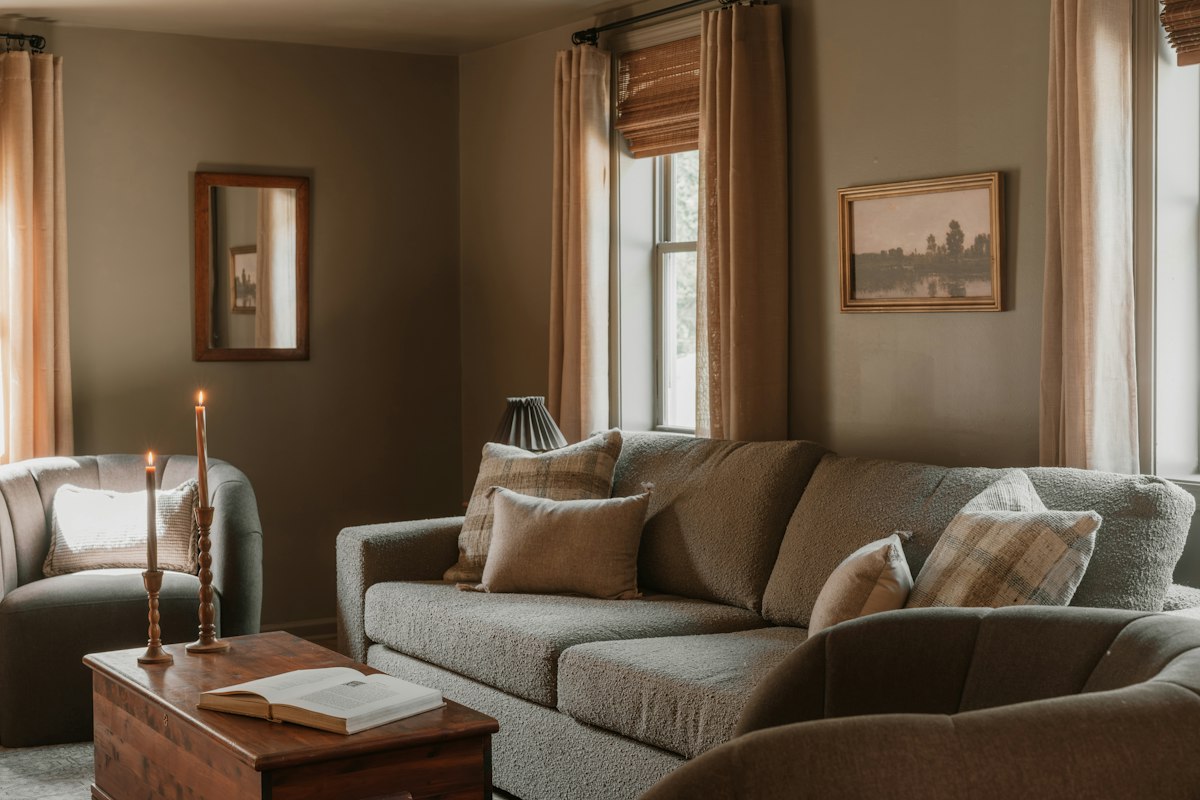
Every living room eventually gets the accent chair nobody sits in. It looked sculptural in the store. At home it's a very expensive laundry rack with arms, while everyone fights for the same corner of the sofa. The problem is rarely taste — it's that accent chairs are bought with the eyes, for how they complete a room's geometry, and judged later by a body that wanted a backrest at a human angle.
A good accent chair does two jobs at once: it fills the visual gap in the arrangement and it is genuinely where someone chooses to read, scroll, or drink coffee. Those jobs sometimes conflict, but mostly they just need different questions asked before buying.
Here's how to pick an accent chair that earns its square footage — sized for real bodies, angled for real conversation, and comfortable for longer than a showroom sit.
The short version
Sit in it (or check the measurements against a chair you love): seat height 16–19 inches, seat depth 20–23 inches for most adults, and a back that supports you at a slight recline rather than bolt upright or hammock-slumped. Then check the room math — an accent chair needs roughly a 30×30-inch footprint plus pull-out space — and buy the chair that fits both the bodies and the floor plan. Swivel and rocking bases earn their keep in conversation areas; fixed sculptural pieces belong where sitting is occasional.
What to look for
- Seat height that matches the household. Feet flat on the floor with knees near 90 degrees. Shorter households should look at 16–17-inch seats; tall households, 18–19. A chair you have to fall into or climb out of won't be chosen.
- Seat depth under 23 inches unless you plan to sit cross-legged or with a lumbar pillow. Deep seats are lounging chairs; they need a cushion strategy to work as everyday seats.
- Arms at the right altitude. Armrests about 7–9 inches above the seat support elbows without shrugging shoulders. Armless chairs look lighter and slide under tables, but give up the elbow perch.
- A back with an opinion. Slight recline (100–110 degrees) suits reading and conversation. Dining-chair upright belongs at a table.
- Upholstery matched to life. Performance fabrics and removable covers survive pets, kids, and coffee. Bouclé looks wonderful and keeps every crumb it has ever met.
- Weight and footprint. You should be able to angle it, vacuum under it, and drag it toward the TV on game night without a second person.
STRANDMON Wing Chair
The modern wingback: high back, wraparound wings, and a seat height that suits most adults — built for reading corners and long conversations, with a matching footstool available.
- High winged back supports head and shoulders
- Firm, upright-leaning comfort
- Wide range of cover colors
- + Genuinely comfortable for long sits
- + Looks far more expensive than it is
- – Generous footprint for small rooms
- – Covers are not removable on most versions
POÄNG Armchair
The bentwood classic whose frame flexes gently as you sit. Light enough to move between rooms, with cushions in many fabrics — the flexible extra seat that guests actually enjoy.
- Layer-glued bentwood frame with a slight spring
- Removable, washable cushion covers on most fabrics
- Head-supporting high back
- + Moves easily; works in any room
- + Replacement cushions are inexpensive
- – Low seat isn't ideal for limited mobility
- – Casual look won't suit formal rooms
Mid-Century Show Wood Chair
Exposed solid-wood frame with cushioned seat and back — the sculptural option that still passes the sit test, for rooms where the accent chair is meant to be looked at too.
- Solid wood frame with angled profile
- Loose cushions for easier cleaning
- Compact footprint for an upholstered chair
- + Strong design presence
- + Sits at conversation height with sofas
- – Premium pricing
- – Armrests are narrow
Matching the chair to the job
The reader's chair wants a high back, a headrest-height wing or tall profile (the logic behind classics like IKEA's STRANDMON wing chair), arms wide enough for a book's elbows, and a nearby lamp — see our floor lamp guide for pairing light with a reading corner. An ottoman or footstool turns a good reading chair into the house's most contested seat.
The conversation chair should sit at sofa height so nobody looms or sinks relative to the group, face into the arrangement at a slight angle, and ideally swivel — turning toward whoever's talking is the difference between participating and spectating.
The flexible extra — a lighter chair like IKEA's POÄNG, whose bentwood frame flexes slightly as you sit — moves between rooms, works at a desk in a pinch, and stores flatter against a wall. If your "accent chair" is really overflow seating for guests, prioritize light and movable over plush.
A note on pairs: matching pairs of accent chairs look symmetrical and hotel-lobby calm, but two different chairs that share a color or material often feel more like a home. If you already own one good chair, buy its companion, not its twin.
Placing it so it gets used
Chairs are sat in when they're part of the arrangement, not exiled from it. Keep the chair's front edge within the rug's territory or just at its border, angled 20–45 degrees toward the sofa rather than lined up like a waiting room. If a walkway passes behind it, leave the usual 30 inches — the full traffic rules are in our small living room layout guide.
Store test that actually predicts happiness: sit down, then stand up three times, hands in your lap. If standing takes momentum, a grunt, or the armrests' full help, that chair will be laundry storage by spring.
FAQ
What is a comfortable seat height for an accent chair?
For most adults, 16–19 inches, chosen so feet rest flat with knees near a right angle. Petite households do better at the low end; tall households at the high end. When in doubt, measure the dining chair nobody complains about and buy within an inch of it.
How much space does an accent chair need?
Plan a footprint of about 30×30 inches for the chair itself, plus room to angle it and walk past. In a conversation grouping, the chair's front legs can sit on the rug with the sofa, which saves visual (and actual) space.
Wingback, barrel, or armless — which style is most comfortable?
Wingbacks support the head and shoulders and suit reading; barrel chairs cradle the back and suit shorter sits and tight corners; armless chairs are the most flexible and the least supportive. Comfort depends more on seat height, depth, and back angle than on style family — check those numbers first.
Should accent chairs match the sofa?
They should coordinate, not match. Same-fabric matching reads as a furniture set and flattens the room. Choose a shared thread instead — a color from the rug, a similar wood tone, or a contrasting texture in the same palette — and the chair will look chosen rather than bundled.